Many businesses begin with the same good intention. They want every client to feel valued, supported, and equally important. That instinct is positive, but it often leads to challenges. When every client is treated the same way, resources get stretched, service feels inconsistent, and the team struggles to keep pace.
In addition, industry conditions can heighten the challenge as well. With advisory teams facing demographic changes and shifting expectations around technology and communication, teams that focus on defined client segments can position themselves for durability and long-term growth. That focus helps the business align offerings, deploy technology, and meet different communication preferences with more precision.
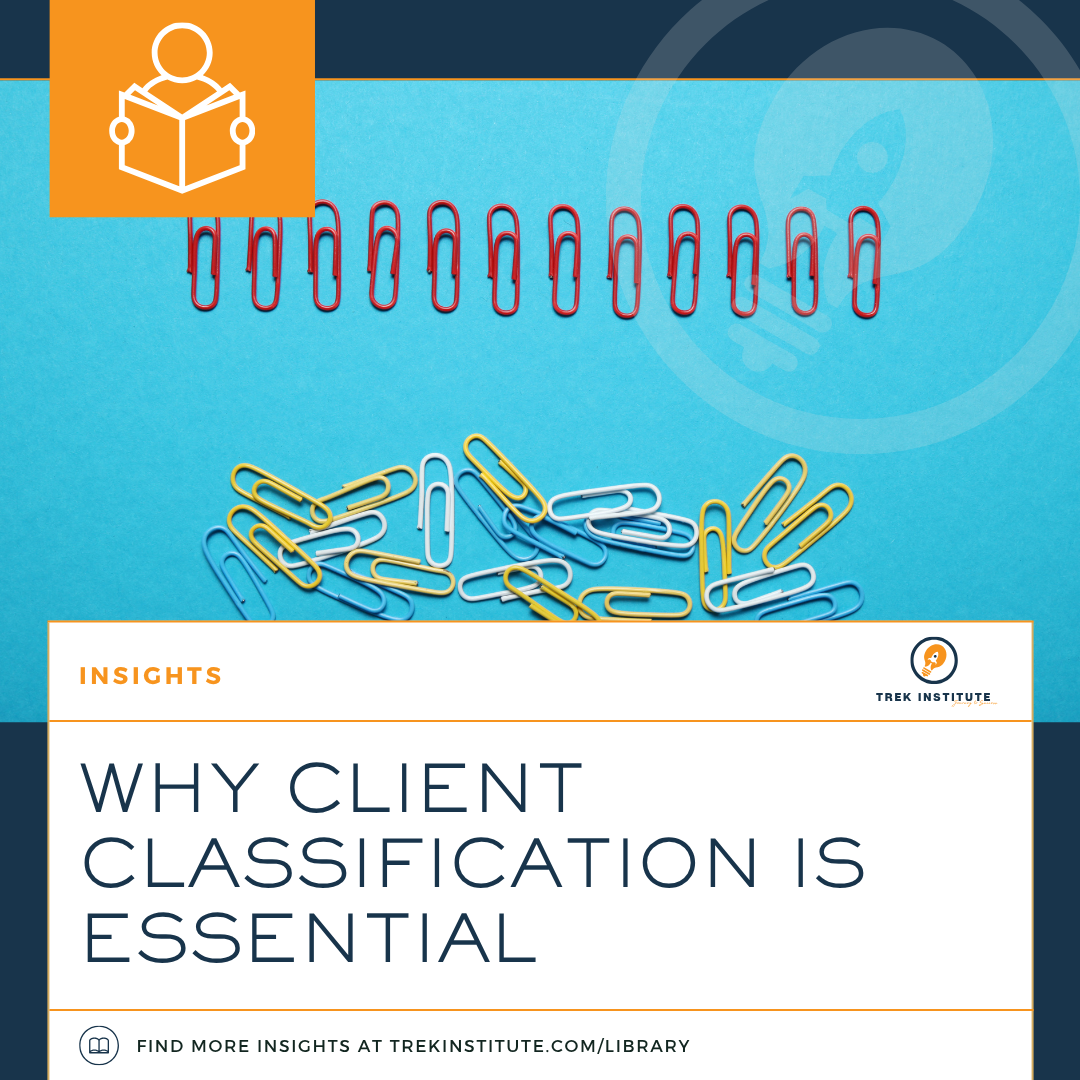
This is where client classification becomes essential.
Why Classification Really Matters
Client classification is the process of organizing relationships into clear classifications based on measurable factors such as revenue contribution, breadth of services used, frequency of meetings, and overall engagement. The result is a shared framework the whole team can apply. Advisors and staff can see what each relationship requires and can deliver that level of support with consistency.
Segmentation methods extend beyond simple revenue or demographics. Value-based grouping looks at profitability and resource demand. Psychographic grouping considers values and attitudes the drive decisions. Life-stage grouping considers where clients are in their journeys such as early career, peak earning years, or retirement. Using a mix of these methods produces a more accurate picture of needs and priorities across the client base.
Why This Step Comes First
Classification reduces decision fatigue and creates alignment. When classifications are defined, the team does not determine services levels on the fly. Meetings, touchpoints, and responsibilities follow a standard pattern that fits each classification. That consistency improves internal coordination and reduces the risk that some clients experience frequent attention while others experience long gaps between touchpoints.
Building the Foundation for a Service Matrix
A service matrix is a working guide that states what each client classification receives. It typically covers service scope, meeting cadence, communication standards, and any additional benefits. However, the matrix is often difficult to build before relationships are organized. Once categorized exist, the team can then define realistic promises and aim to meet them reliably.
Teams can differentiate delivery in practical ways such as adjusting meeting cadence, planning outbound touchpoints, setting response standards, choosing the right mix of in-person and virtual interactions, and adding appropriate acknowledgments. This can all be done while keeping core support standards consistent so the experience remains reliable as the team scales.
A service matrix visualizes the plan for the relationship. It sets the number and type of meetings, the team’s communication methods, and the handoffs between roles. Classification organizes the matrix and ensures each client receives a meeting rhythm and communication approach that fit the relationship’s needs and level of engagement. Proactive touches are scheduled where they have the most impact, and unnecessary steps are removed when needs are straightforward, leaving clients an experience of consistent, well-supported service.