TREKINSIGHTS

Trek Institute LIBRARY

Succession Planning Timelines

Insights from Base Camp

Your succession plan is built on the goals you have for your legacy, both inside and outside of your business.

But what is a legacy to you? Is it simply continuing the operation of your practice? Is it your personal wealth? Your family’s wealth? A continuation of the brand and reputation you have built? A career path for your children?

All of these ideas are important as legacy planning for businesses is multi-faceted. And they are based on a combination of technical and emotional considerations. Moreover, when it comes to succession planning timelines, your legacy plays a large roll in how the transition will unfold.

 
What has the potential to delay your timeline?

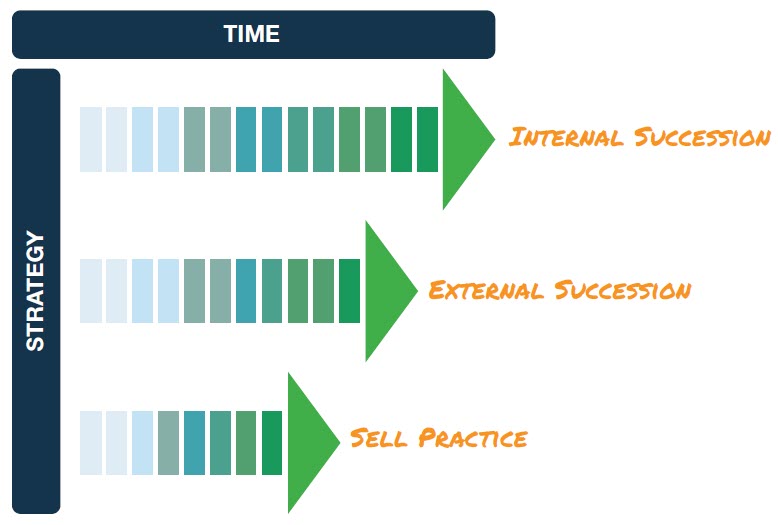
Internal succession comes with the highest stakes. In many cases, internal successions are prompted by the legacy of passing a business on to a child. With this strategy comes many trials, challenges, and potential for extended timelines. Not only do you have the responsibility of vetting your internal talent, addressing their future potential for succession, you have to create a training timeline extensive enough to thoroughly integrate them into your leadership position.


External succession may come with fewer technical and emotional burdens, but there is still a connection to the idea that the legacy of the business and those impacted by it could be in jeopardy when left with someone not familiar with your culture. The positive side is that this strategy comes with pre-done training in the respect that the successor is likely already an experienced advisor, possibly with their own book.


Selling your practice, for practical reasons, could be quite possibly the quickest way to transition a business. The downside is that you are passing your legacy on to someone out right – relinquishing control of your ops, staff, and clients with little to no transition. From a timeline perspective, this strategy is often driven by money, or lack of options/time for a successor.



Building a Timeline

Establishing a realistic timeline is yet another difficult decision you will have to make. As you have seen so far, effective succession planning doesn’t happen overnight. 

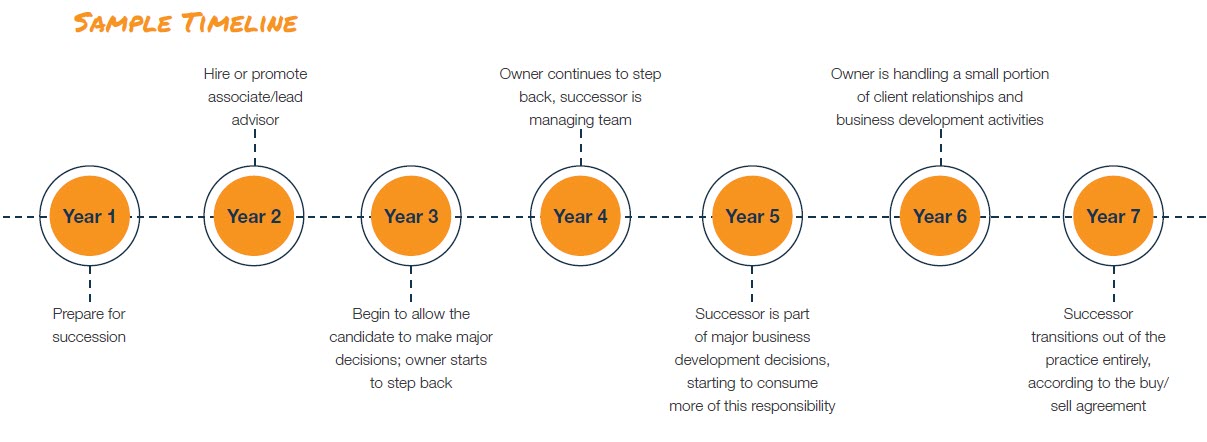
Generally, succession planning is a 6-12 month process – just for planning and design. This doesn’t include execution of the process, which can take anywhere from 5-7 years before a successor can truly “take over” the business. Add in the potential of family succession, and this timeline could be extended even further.

What do you need to fit in that 5-7 year process? And why does it take so long? Indeed, choosing a successor may seem to be the easiest part of the process. However, the most time consuming portion comes with teaching them how to run the practice, how to build and maintain client relationships, how to market to prospects, how to make sure ops are running smoothly – and how do all of this efficiently.

Transitioning a successor into full-time leader takes years. Additionally, finding their replacements (if necessary) and training those roles is just another task box to check. So, when you look at the time it takes to turn over the keys, think about all of the details that must be taken care of to support the successor in their mission to grow your practice into their own.

Things to consider as you build your timeline:

  • How much time will it take for me to find a suitable successor?
  • How much experience does this person have coming into my role?
  • How much time will it take to integrate them into my existing culture?
  • How much time will it take for them to fully learn the operations of my business?
  • How much time will it take to transition client servicing to them?
  • If promoting from within, how much time will it take for us to find and train my successor’s replacement?

What is a legacy to you? How does your legacy impact your succession timeline?